

What is Hand Fractures?
Hand Fractures – The skeleton system of the hand is made up of 29 bones and dozens of joint surfaces between them. The tendons, which are the extensions of the muscles of the forearm that move the wrist and the fingers, insert into these bones. There are multiple complex ligaments and capsular soft tissues in between these bones. If the integrity of the bones somehow destroyed due to trauma, fractures will occur.
What is importance of a fracture for the hand?
A hand fracture can cause permanent pain, stiffness and loss of motion. Some fractures may be the reasons of angulation and deformities. If the fractures extend into the joint, they may cause degenerative arthritis of the joint in the long term.
How do we know that our hand is broken?
- Pain around the fracture site
- Swelling is remarkable
- It causes movement difficulty at the joints near the fracture.
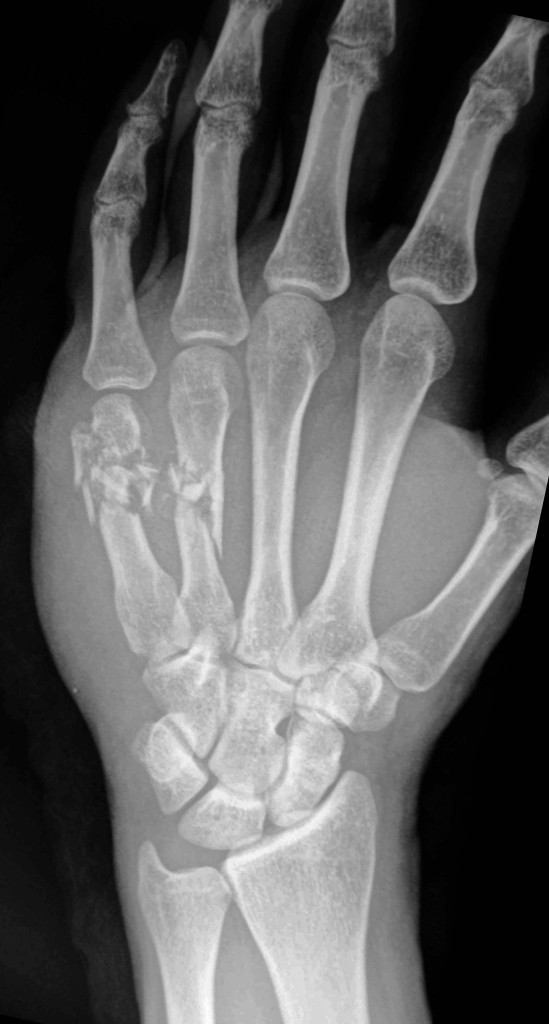
Some fractures are in simple fashion; however, some fractures may be fragmented, comminuted, displaced, and complicated in such a way to cause obvious deformity. While some fractures occur in the body of the bones, some of them may extend to the joint line. The type and configuration of the fracture may change according to the severity of the energy. If the fracture occurs with high-energy traumas accompanied with open wounds, it may lead to many complications, including wound problems.
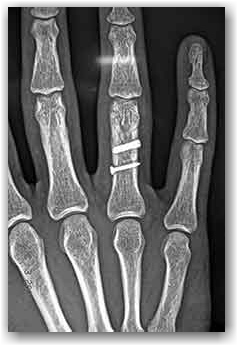


The treatment of a hand fracture
The treatment plan varies according to the position of the fracture, type, and configuration which are evaluated on x-ray. In addition, age of the patient, general health status, affected of dominant or recessive side, work and social life, concomitant injuries are considered for planning the treatment.
- Some fractures are treated with various types of splints and casts. The aim of this approach is to protect the correct position of the fracture until it will be healed.
- Special splints may be needed externally to keep some fractures in their position.
- Some fractures require surgical treatment.
In the surgical treatment, various nails/pins, screws, or plate and screws can be used to fix the fracture once the fracture is restored in its normal anatomical structure. Restoration of the joint line has to be perfect as much as possible if the fracture involves the joint itself. There may be bone deficiencies in the structure after the fracture has been restored in high-energy traumas that are very fragmented/comminuted, crushed, and complex fractures with a bone loss. In such cases, different bone substitutes (bone grafts) may be needed. In case of open and contaminated fractures, external fixation using special devices called external fixators may be needed. The rehabilitation of the hand during fracture treatment is essential. Appropriate and well-designed rehabilitation programs are so important to prevent stiffness, limitations of motion, swelling, pain, and the other problems.
What are the expectations on the management of hand fracture treatment
Although it is preferable to radiographically restore the original skeletal system again as it was before the fracture, it is not always necessary to get perfect bone alignment for obtaining good function. Abnormal bony surfaces may be remodeled and some bumps disappeared in time especially in childhood fractures. Even though every principle of the fracture management would be executed precisely, some of the following complications may be inevitable:
- Stiffness
- Restricted movements of the joints
- Infection
- Delayed union
- Nonunion


What are the negative factors affect the fracture healing quality?
Cigarette smoking is the one the most well-known negative factors on fracture healing. Some fractures closed to growth plates in children may have negative effects on bone growth. Open fractures and delay to begin treatments are the other negative parameters. Lack of appropriate rehabilitation programs may be the reasons of poor results.
Prof. Dr. Eftal Gudemez
Orthopedics and Traumatology
Hand Surgery and Microsurgery